
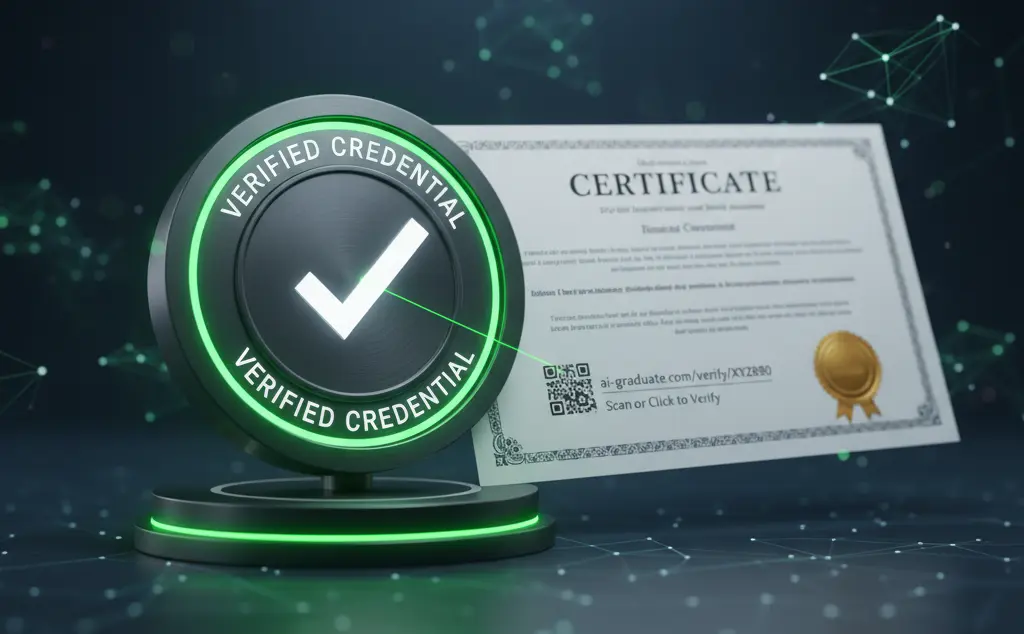
The verification gap
Most free AI certificates have a problem: there is no way to verify them independently. They are static images or downloadable PDFs. They have no credential ID, no verification URL, and no way for anyone other than the certificate holder to confirm they are genuine.
This matters more than it might seem. A certificate that cannot be verified is asking the reader to take the holder's word for it. In a job market where AI credentials are becoming standard, hiring managers and recruiters are increasingly looking for certificates they can actually check.
What a screenshot certificate cannot do
A screenshot or PDF certificate — however professional it looks — cannot:
- Confirm the certificate belongs to the person presenting it
- Confirm the certificate has not been altered
- Confirm the issuing organization actually issued it
- Confirm a pass threshold was met (as opposed to just completing a course)
This is not an abstract concern. As AI certifications have proliferated, so have cases of credentials being fabricated or misrepresented. Verifiable certificates exist specifically to solve this problem.
A screenshot or PDF certificate — however well-designed — cannot confirm who earned it, whether it was altered, or whether a pass threshold was actually met. As AI certifications have become common, so has certificate misrepresentation. Verifiable credentials exist specifically to close this gap.
What a verifiable certificate can do
A properly issued verifiable certificate provides a unique URL — something like deliberateacademy.com/verify/abc123 — that anyone can visit without an account. When a hiring manager, recruiter, or client visits that page, they see:
- The certificate holder's name
- The course or qualification name
- The issuing organization
- The date of issue
- Confirmation that the certificate is genuine
This can be checked in under 30 seconds. It is the difference between a credential and a claim.
How to check a certificate independently
If someone presents you with an AI certificate and you want to verify it, look for:
- A credential URL in the LinkedIn Certifications section, on their CV, or on the certificate itself
- A credential ID that corresponds to a record in the issuing organization's system
- A verification page that loads their specific certificate, not just a generic course page
If none of these exist, the certificate cannot be verified — regardless of how it looks.
If you are the one holding the certificate, make sure your credential URL is in your LinkedIn Certifications field and on your CV. Leaving it out defeats the purpose of having a verifiable credential.
When adding a verifiable certificate to LinkedIn, paste the full verification URL directly into the Credential URL field — not just the platform homepage. A recruiter who clicks through and sees your specific certificate page in under 30 seconds is far more likely to weight it as genuine evidence than one who lands on a generic course listing.
Which free AI certificates are verifiable
The certificates that offer genuine public verification in 2026 are a short list. Coursera certificates include a verification URL but require a paid enrolment for most courses. Elements of AI from the University of Helsinki includes a certificate URL after completion.
Deliberate Academy courses issue certificates with unique credential IDs and a public verification page at /verify/[certificate-id]. The verification page is accessible without an account — any employer or client can check it directly from a link in your LinkedIn profile or CV.
The exam-based model also matters here: because the certificate is only issued after passing a knowledge assessment, the credential reflects demonstrated understanding, not just completion. That is what a verifiable certificate should represent.